In industrial fuel storage tanks, diesel tanks, chemical tanks, genset fuel tanks, and other liquid storage systems, accurate fuel level monitoring is crucial for minimizing losses, optimizing operations, and ensuring safety. Among the various level-measurement technologies available today, the capacitive fuel level sensor is considered one of the most stable and reliable solutions.
So how exactly does a capacitive fuel level sensor work? And why is this technology widely used in industrial fuel-tank applications?
 1. How a Capacitive Fuel Level Sensor Works
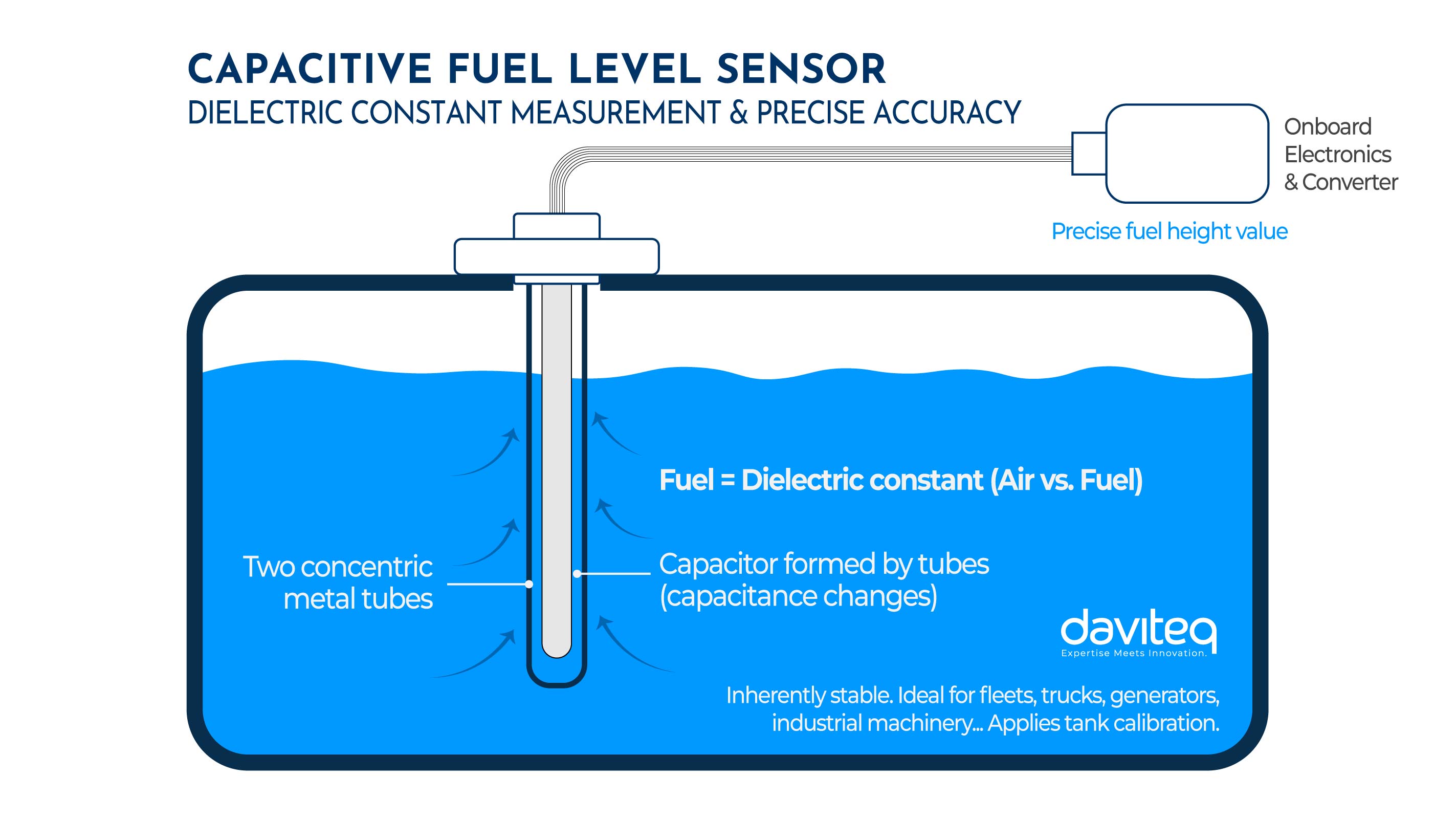
A capacitive fuel level sensor operates based on changes in capacitance, which vary according to the dielectric constant of the liquid inside the tank.
Inside the sensor, two concentric metal tubes form a cylindrical capacitor. The space between these tubes may contain:
- Air → low dielectric constant
- Fuel → significantly higher dielectric constant
As the fuel level rises between the tubes:
- The dielectric constant increases
- The capacitance increases
- The onboard electronics detect this change and convert it into a fuel-level value
As the fuel level drops:
- The dielectric constant decreases
- The capacitance decreases accordingly
- The sensor recalculates the new level
The internal electronics process this capacitance change and output a high-resolution fuel-height reading, achieving millimeter-level accuracy when properly calibrated to the tank height.
 2. Why Capacitive Sensors Are Widely Used for Fuel Measurement
Here are four key reasons why capacitive sensors have become the preferred solution for industrial fuel-tank monitoring:
 High measurement accuracy
Because the measurement is based on dielectric changes—not mechanical movement—the sensor provides stable, low-noise readings.
Unaffected by vibration
Industrial environments such as gensets and machinery produce significant vibration, but capacitance remains unaffected by liquid sloshing or mechanical motion.
Long-term stability
No moving parts → no mechanical wear → lower maintenance effort.
Easy integration with IoT (LoRaWAN / Sigfox / NB-IoT)
Modern capacitive sensors can transmit level data directly to cloud-based monitoring platforms.
For these reasons, capacitive sensors are widely used across factories, fuel depots, construction sites, heavy-machinery operations, and genset installations.
3. Practical Example: Daviteq’s CAP10 Series
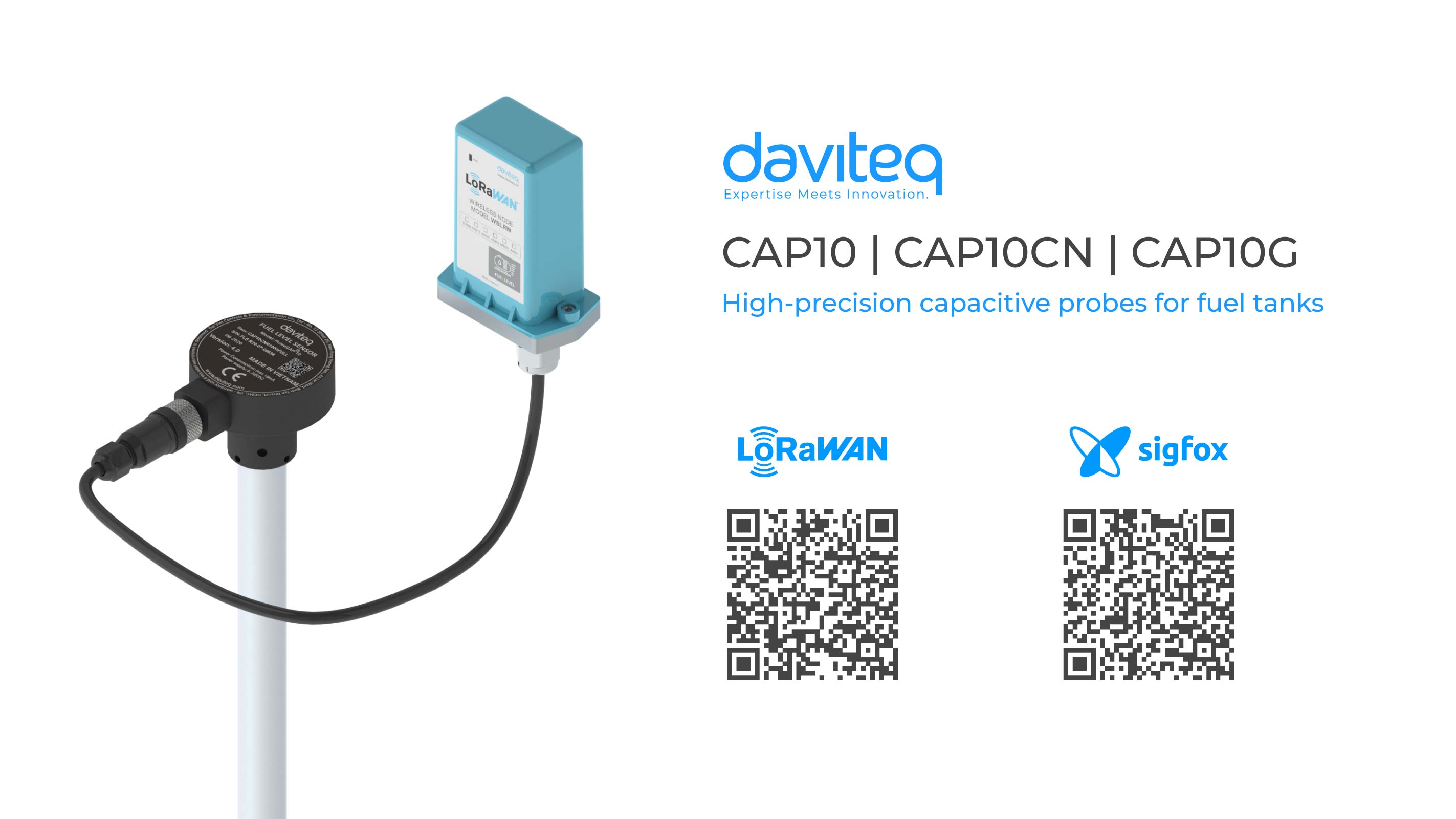
Below is an example of a modern industrial capacitive level sensor family: the CAP10 Series.
- CAP10 / CAP10CN / CAP10G
- LoRaWAN version → WSLRW-CAP10
- Sigfox version → WSSFC-CAP10
Key characteristics:
- High accuracy for diesel, gasoline, and similar fuels
- Customizable probe length to match tank height
- Integrated electronics with strong EMI resistance
- Designed for harsh industrial environments with vibration and temperature variations
 4. Read the Full Technical Article
For a deeper explanation of:
- Sensor installation positions
- Comparison of capacitive vs. ultrasonic vs. radar vs. float sensors
- Operating principles of each technology
- Troubleshooting and common sensor errors
- How to choose the right level sensor for industrial applications
 Full article (English):